

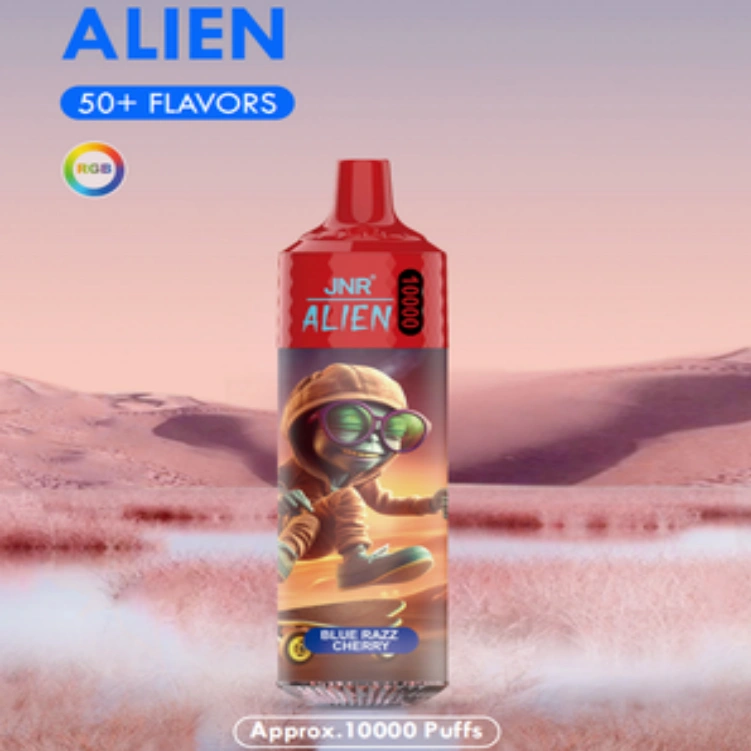
How to Tell If Your E-Cigarette Comes in Genuine Packaging
Buying a counterfeit e-cigarette is not just about wasting money — it puts your health at real risk. Fake devices often use cheap batteries, untested e-liquid, and poor materials that can release harmful substances when heated. The good news is that authentic packaging carries several built-in clues that are hard for counterfeiters to copy perfectly. Here is what to look for, step by step.
Examine the Outer Box and Print Quality
Genuine e-cigarette boxes are produced under strict quality control. The colors should be vivid and consistent across the entire surface, with no visible fading or uneven tonal shifts. Text, logos, and barcodes must be crisp — no blurred edges, no pixelation, and no ink smudging.
A quick trick: hold the box under bright light and tilt it slowly. Authentic packaging uses high-grade cardstock with a smooth matte or soft-touch finish. Counterfeit boxes often feel flimsy, and you may notice the print has a slight graininess or “halo” effect around letters when you look closely.
Warning labels are another tell. On products that comply with national standards, the health warning text occupies at least 35% of the visible panel area. The font weight is noticeably bold on real boxes. Fakes tend to use thinner fonts, and the color may look slightly off — a shade darker or washed out compared to the genuine version.
Check Security Features and Verification Codes
Most reputable manufacturers embed anti-counterfeit measures directly into the packaging.
Tamper-Evident Seals and Batch Codes
A genuine box will have a one-time security seal — usually a plastic film or sticker that tears or changes appearance when removed. If the seal looks like it was simply glued back on, or if it peels off cleanly without any residue or damage, that is a red flag.
Look for a production lot number and expiration date printed on the bottom or side panel. The format is typically something like “Lot: 230501” and “Exp: 2026-10-01”. Counterfeiters often skip these entirely, or they print something that does not follow the brand’s standard format — for example, plain numbers without the “Lot” prefix.
QR Codes and Authentication Stickers
Many authentic products include a QR code or a scratch-off verification panel. On genuine packaging, the English text on the sticker is perfectly centered and uses a uniform font style. On fakes, the alignment is often slightly off, and the font weight or spacing varies from one word to the next.
If the product has a scratch-off area, try peeling back a tiny corner. On real packaging, the layer underneath reveals a silvery-white reflective surface. Counterfeit versions sometimes show a greenish or dull-colored underlayer.
Not every market uses QR codes — some overseas editions rely on different verification systems. In those cases, the absence of a QR code does not automatically mean the product is fake. Always cross-reference with other packaging details.
Inspect the Device and Pod Construction
Once the box passes the visual test, open it and examine what is inside.
The pod or cartridge should feel solid in your hand. Authentic pods have a fine matte finish on the outer shell — smooth to the touch, with no rough patches or visible seams. The mouthpiece is made from food-grade plastic, so there should be no burrs, no sharp edges, and no plastic smell when you bring it close to your nose.
Look at the bottom of the pod. Genuine units usually have the brand name laser-engraved — the letters are sharp, evenly spaced, and sit flush with the surface. Counterfeit pods often have a stamped or printed logo that looks faded or slightly raised.
The electrical contacts on a real pod are polished and uniform. Fakes tend to have contacts that look rough, uneven, or slightly oxidized even when brand new.
If you hold the pod up to a light source, you can sometimes see through the e-liquid chamber. Authentic pods typically use a cotton wick that appears as a thin, clean line. Counterfeit pods may show no visible wick structure, or the liquid inside looks cloudy with suspended particles — a sign of poor filtration and untested ingredients.
What About Price and Where You Buy
This one is simple but worth repeating: if the price seems too good to be true, it almost certainly is. Counterfeiters compete on price because they cut every corner — cheap batteries, no quality testing, recycled materials. A product sold at a steep discount through unofficial channels, social media sellers, or unverified online marketplaces has a very high chance of being fake.
Stick to authorized retailers or the brand’s official website. If you are buying in a physical store, ask to see their tobacco retail license — legitimate sellers are required to display it.
When in Doubt, Get It Tested
If you have already purchased a product and something still feels off, you do not have to guess. Local tobacco administration offices have detection equipment and trained staff who can authenticate e-cigarette products. The process involves both sensory inspection (visual and tactile) and instrumental analysis to check whether the device meets national safety standards.
You can also contact the manufacturer’s customer support directly with photos of the packaging, batch number, and verification code. Most brands will respond within a day or two and tell you whether the serial number is valid.
Counterfeit e-cigarette packaging keeps getting more sophisticated, but it still lags behind the real thing in small details — print sharpness, seal integrity, contact finish, and liquid clarity. Trust your eyes, trust your fingers, and when something does not feel right, verify before you vape.